Built-Ins That Earn Their Keep
Storage ideas from a recent custom home — and what each one actually costs.
The parts of a house people photograph are the big moves — the vaulted ceiling, the wall of windows, the view. The parts they actually use every day are smaller and duller: where the coffee gets made, where the backpacks land, where the laptop lives. Built-ins are how you make those places work without giving up the room.
Here are four from a recently completed South Bay custom home, what each one solves, and roughly what it costs to build.
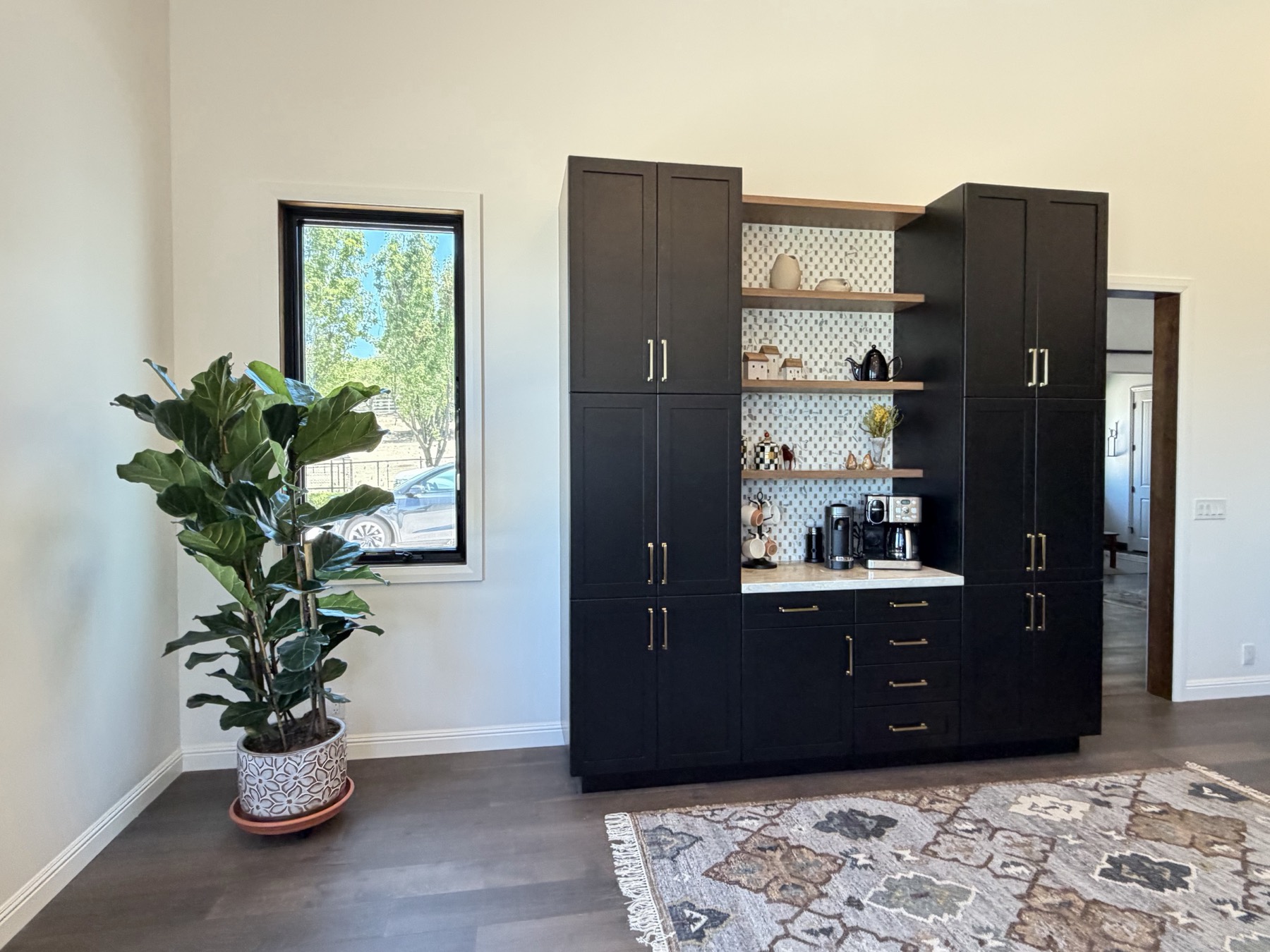
1. The coffee bar
A dedicated coffee wall does one useful thing: it moves the morning traffic jam out of the kitchen. Tall cabinetry on both sides hides the bulk storage, the counter run holds the machines, and open shelves in white oak keep it from reading as another slab of cabinetry.
The detail that makes it work is the tiled back — running finished material behind the shelves instead of painted drywall is what separates a built-in from a shelf someone screwed to a wall.
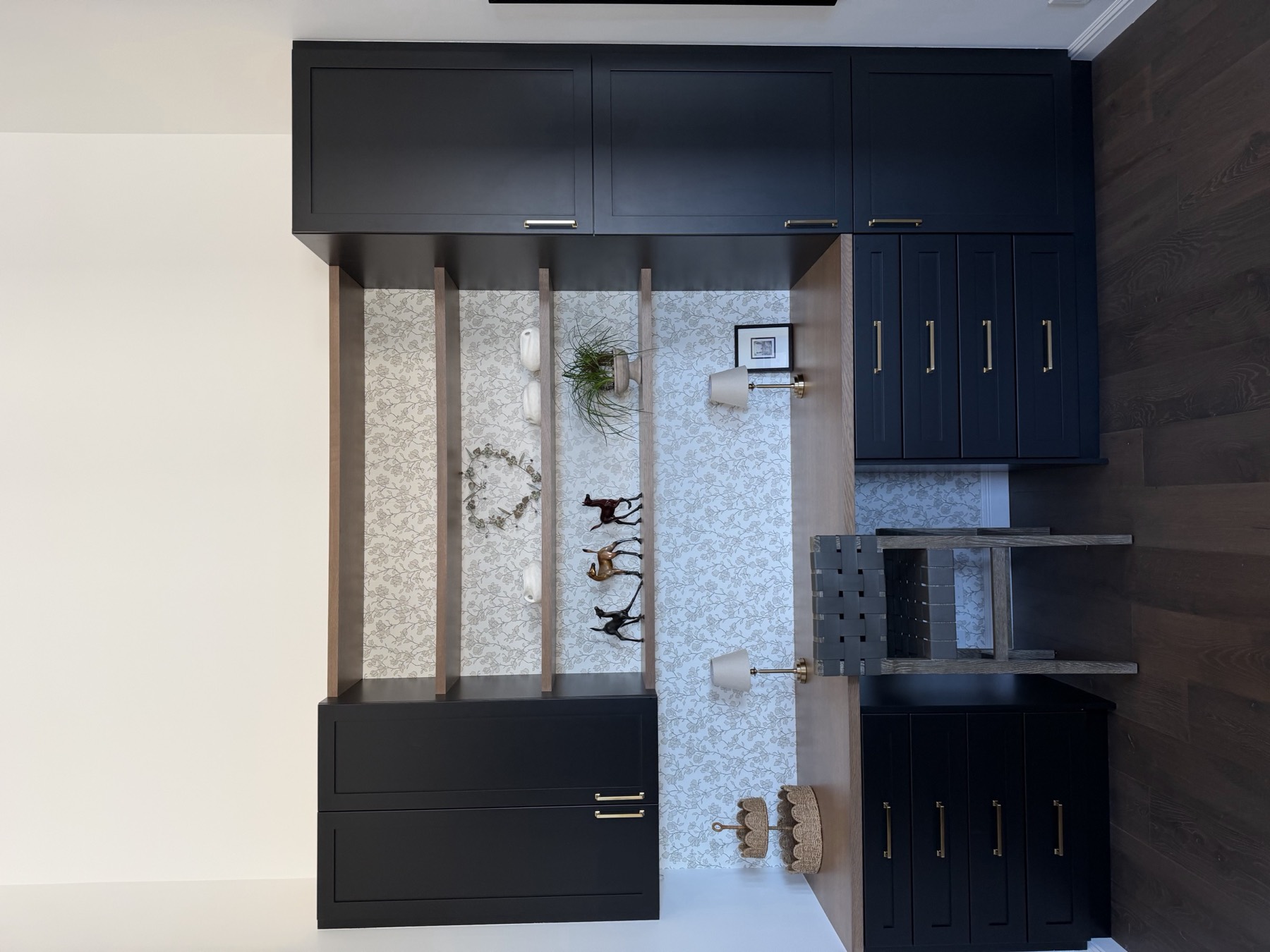
2. The desk nook
Not an office — a place to sit down for twenty minutes. Built between two tall cabinets so it has walls on both sides, with drawers underneath and shelves above, it takes about six feet of wall and removes the need for a whole spare room.
If you are weighing a home office addition against something like this, it is worth pricing both. A nook is a fraction of the cost and, for most people, is what they actually needed.
3. The butler's pantry
The overflow room. Serving pieces, small appliances, the things that make a kitchen look cluttered when they live on the counter. Full-height cabinetry on both ends, a working counter in the middle, and wallpaper behind the shelves so the back of the run has something to say.
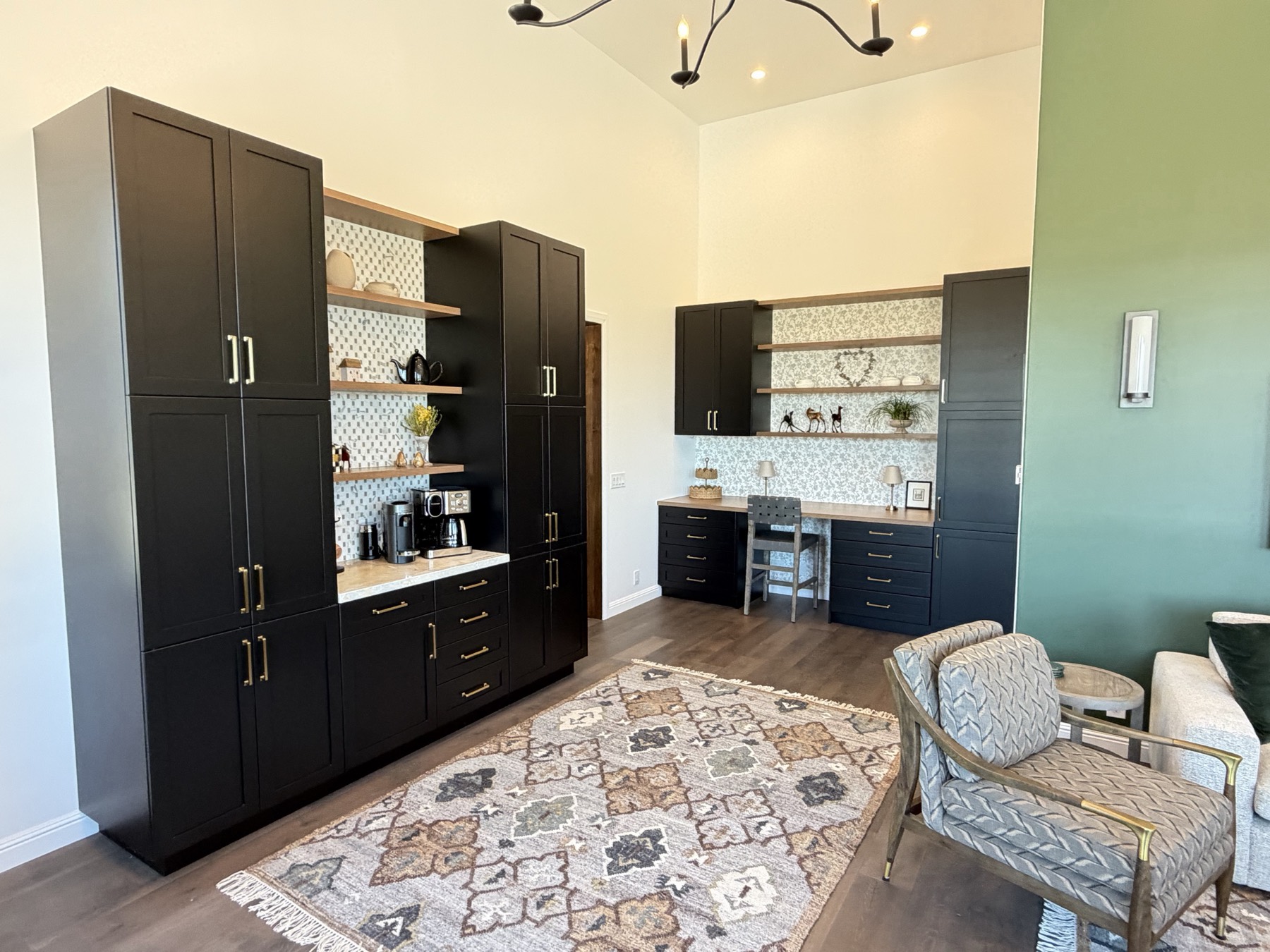
4. Making it disappear into the room
The reason all of this reads as architecture rather than furniture is consistency — one door profile, one paint, one hardware finish, repeated across every run in the house. Change any of those between rooms and the built-ins start looking like separate projects, because that is what they become.
What it costs
Custom built-in millwork generally runs $400 to $900 per linear foot installed. A coffee bar or desk nook usually lands between $6,000 and $15,000. A full butler's pantry wall runs higher, because tall cabinetry and a working counter carry more material and more labour.
The bigger cost is time, not money. Custom cabinetry takes eight to fourteen weeks from approved drawings to install. That lead time is the most common reason a finish schedule slips, which is why we order it early rather than treating it as a late decision.
Thinking about your own
We build custom homes, additions and remodels across Gilroy, Morgan Hill, San Jose, Los Gatos and the wider South Bay, and millwork like this is part of most of them. See more finished work in the gallery or browse recent projects.
Common questions
How much do custom built-ins cost?
Built-in millwork generally runs $400 to $900 per linear foot installed, depending on door style, materials and hardware. A coffee bar or desk nook typically lands between $6,000 and $15,000; a full butler's pantry wall with tall cabinetry runs higher. Paint-grade shaker is the value end; rift-sawn white oak and inset doors sit at the top.
Are built-ins worth it compared to furniture?
For anything that has to fit a specific wall, yes. Built-ins use the full height of a room, sit flush without wasted gaps, and read as part of the house rather than something you moved in. The trade-off is permanence and lead time — cabinetry is drawn, ordered and built, so it belongs in the plan early rather than as a late addition.
How long does custom cabinetry take?
Plan on eight to fourteen weeks from approved drawings to installation for custom work, and longer for specialty finishes. That lead time is the single most common cause of a delayed finish schedule, which is why we order cabinetry well before drywall goes up.
Can you match new built-ins to existing cabinetry?
Usually. Matching an existing paint colour and door profile is straightforward; matching an aged stain on real wood is harder and sometimes the honest answer is to refinish both so they agree. We will tell you which situation you are in before you commit.
Talk to a Licensed Builder
No pressure and no sales pitch — just a straight answer on what your project takes and what it costs. D One Builders, CSLB #1028049.
Request a Free EstimateOr call 831-318-5896